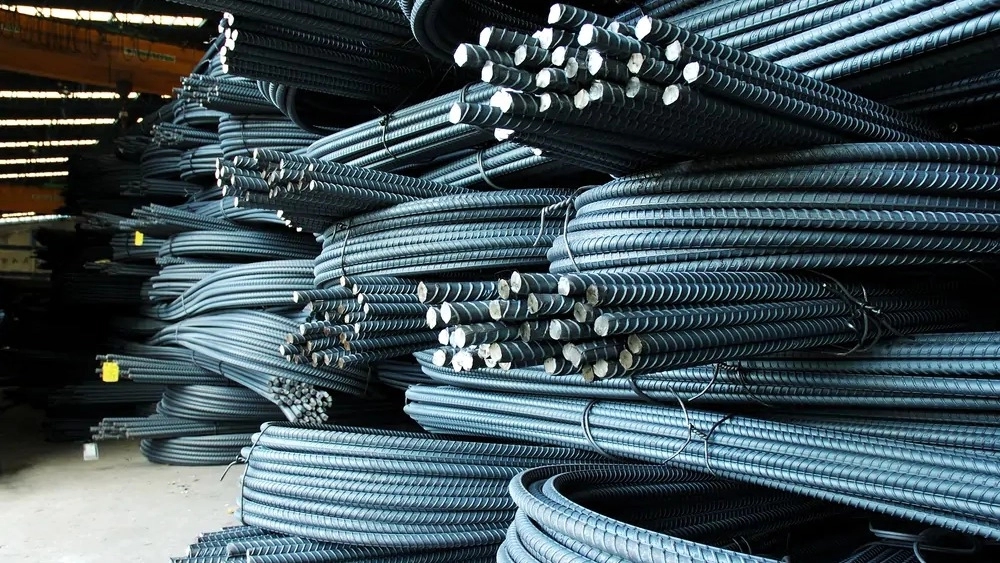
In the custom of the iron market, iron tools are usually divided into industrial and construction iron tools. Although this division is not complete and accurate and a steel product can be used both in industry and in construction, but this division is very common. The main difference between these two groups of iron products is that building irons are iron and steel products that are directly used in the building and construction industry. Unlike industrial iron, which instead of being used in building construction, they are used in the construction and production of other industrial products.
Construction profiles
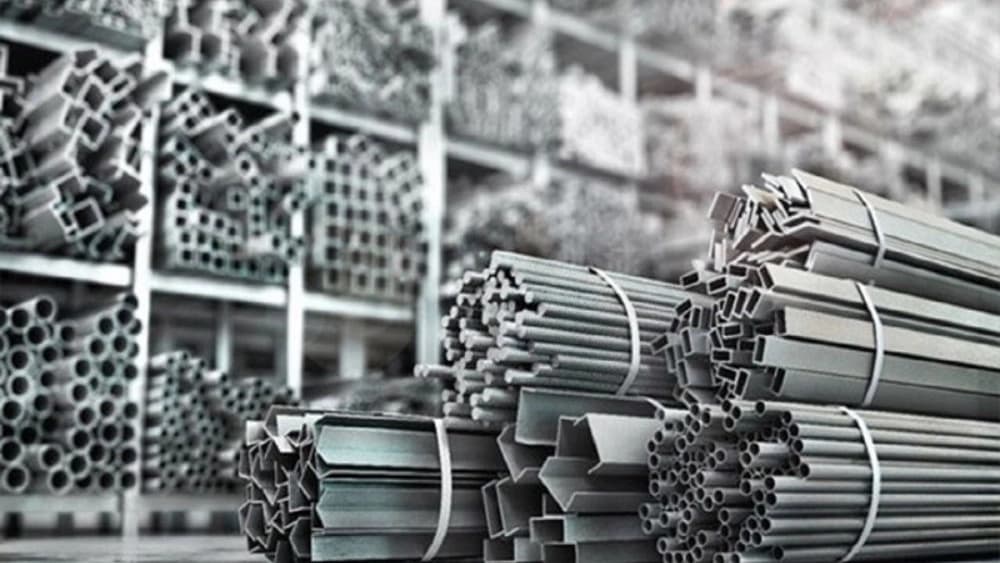
A group of building irons that have a certain cross-section and length is called a profile. Profiles are divided into open or closed categories. Open structural profile: If the external surface and forming the cross-section is an open geometric shape, this type of profile is an open profile. Among the types of open profiles, we can mention stud, corner, beam and Z profile. Closed structural profile: If the external surface is a closed geometric shape such as a circle, square or rectangle, it is called a closed profile, which includes cans, types of pipes such as furniture pipes, etc. Can: Can is one of the profiles with a square or rectangular cross-section. It is also called profile in the market. It is used in the manufacture of metal shelves, automobile manufacturing, door and window manufacturing. So the can can be considered a dual-purpose industrial and construction profile.
Scaffolding pipe: Scaffolding pipe is used in cases where work is at height and creating temporary support in structures. Water pipe: Water pipe is a pipe that is produced with different diameters and it is used to transfer water to different parts of the building. These pipes are perhaps the most widely used types of pipes in the construction sector. Of course, now the use of non-metallic pipes has become more common. Gas pipe: Gas pipe with a small diameter (about 2 inches and less) is one of the most widely used pipes in the construction sector. Although plumbing may not be considered the main part of construction, but gas pipe can be considered one of the pipes used in construction and industry.
The most important use of iron
Perhaps it can be said that the simplest application, which is also the most important, is the use of all kinds of iron in building construction. But these applications are much wider and from the manufacture of tools to huge structures such as skyscrapers, bridges, industrial machinery, etc., all depend on the use of these steel sections. Also, a large part of all types of transactions and trade of each country is related to these irons, so that we see a high volume of transactions in this field every day. Therefore, the use of iron as a source of investment cannot be ignored.
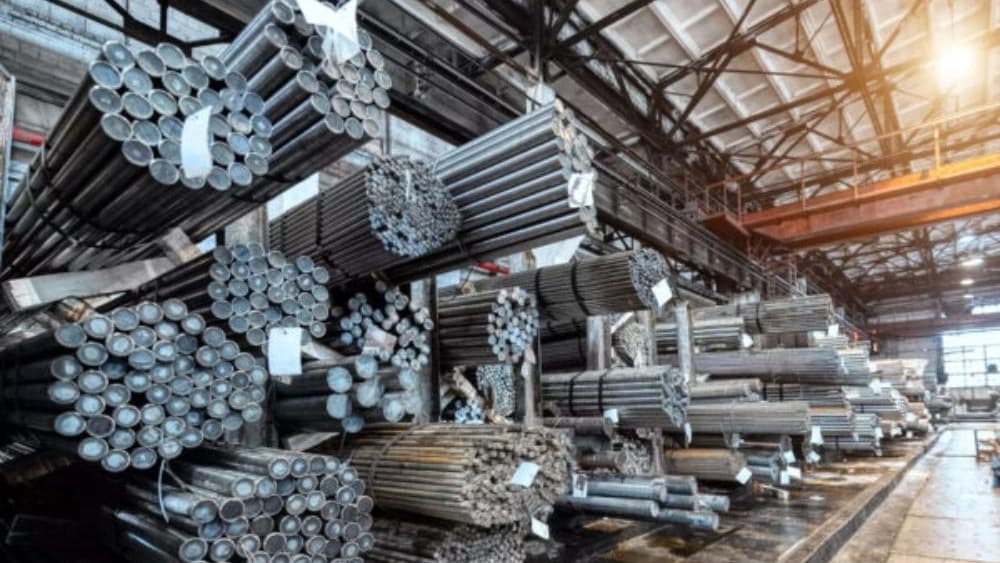
Factors Affecting the Application of Iron
Strength
The ability to mold and bend steel into different shapes means that steel is one of the most efficient materials used in construction. The mechanical properties of steel are derived from a set of compounds including its chemical composition and its manufacturing process and heat treatment. The main element in the composition of structural steel is iron. However, the strength of steel can be significantly increased by adding different alloys such as manganese and niobium. While these elements may ultimately strengthen the steel, they can also have negative effects on other properties such as ductility and weldability. The mechanical work of steel also plays a role in its overall strength. In general, the more steel is rolled, the stronger it becomes. Steel also has a very high strength-to-weight ratio, meaning it is structurally lighter. This feature has a great impact on the overall cost of the building.
Cost
In most cases, structural steel is the most cost-effective option in construction. Over the past 30 years, improvements in steel production processes have increased productivity rates exponentially. It takes significantly less time to produce a ton of steel, which means it's much cheaper as a base material.
Adaptability
Due to the versatility of steel, architects and designers now have more freedom to apply creativity to projects without sacrificing any functional requirements. Modern applications of steel have made it not only in the structure, but also in the aesthetic aspects of the building. Unlike wood and concrete, steel can be easily bent and shaped in many different ways. In this way, designs and non-linear views will benefit greatly from the use of structural steel.
Stability
Fire -resistant
In general, steel is a non-combustible material. However, when heated enough, it loses its integrity. The temperature at which a steel can withstand the greatest load without breaking its integrity is usually known as the critical temperature.
Corrosion resistant
In terms of corrosion, it is likely that water will affect the integrity of the steel. However, there are preventative measures that can be taken to prevent steel from being damaged by corrosion. Special protective paints and sprays are among these items. This is often referred to as a surface operation. Steel is usually coated with fire-resistant materials, which doubles its corrosion protection.